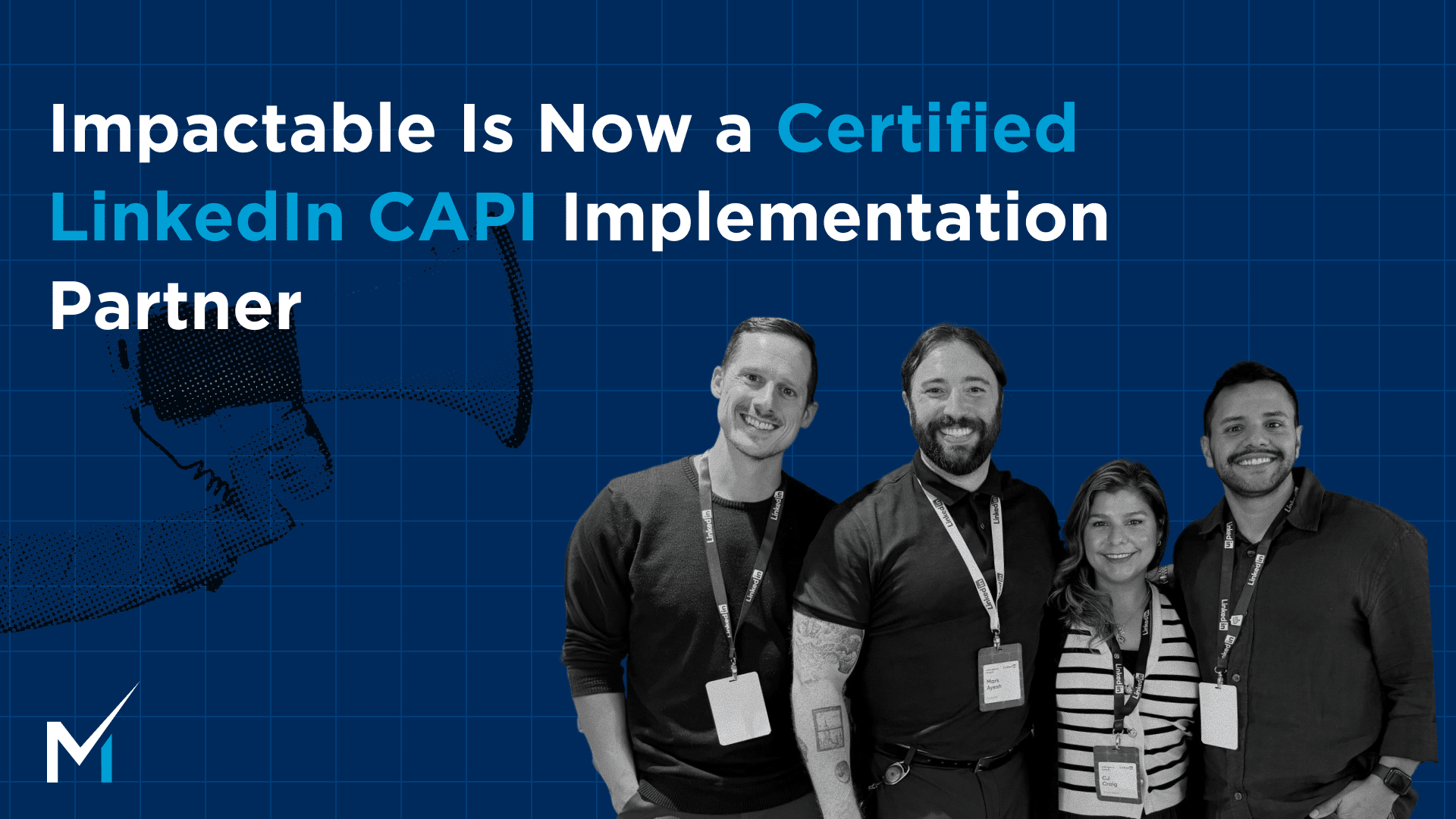
Big news: Impactable has officially joined the LinkedIn Marketing Partner Program for Signals.
That means we’re now a certified LinkedIn Conversion API (CAPI) implementation partner — one of a small group of agencies LinkedIn has recognized for the technical expertise and infrastructure to actually do this right.
Here’s why that matters to you.
The Tracking Problem Most B2B Advertisers Are Quietly Dealing With
If you’ve run LinkedIn ads in the last couple of years, you’ve probably noticed your conversion data getting murkier. Browser restrictions, privacy regulations, iOS updates, ad blockers — all of it chips away at client-side tracking. By the time a conversion makes it from someone’s browser back to LinkedIn’s platform, there’s a real chance it got dropped along the way.
That’s not a LinkedIn-specific problem. It’s an industry-wide one. But it hits B2B advertisers especially hard because the buying cycles are long, the leads are expensive, and the cost of a misattributed (or missing) conversion is significant.
LinkedIn’s Conversion API was built to fix this. Instead of relying on a browser pixel to fire, CAPI creates a direct, server-to-server connection between your backend data and LinkedIn’s platform. No browser needed. No tracking gaps. High-value conversion events — form fills, demo requests, closed deals — go straight to LinkedIn through a secure, reliable pipeline.
The problem? Setting it up correctly isn’t trivial.
What This Partnership Actually Means
Joining the LinkedIn Marketing Partner Program for Signals isn’t a marketing badge. It’s a signal (pun intended) that we’ve met LinkedIn’s standards for implementing CAPI at scale. We have the certified team, the technical infrastructure, and the managed service model to do this for advertisers without it becoming a six-month engineering project on your end.
Concretely, here’s what we bring to the table:
- End-to-end CAPI management — from initial data setup to complex campaign orchestration.
- Improved attribution accuracy — increasing signal visibility to ensure no high-intent lead goes uncounted.
- Full-funnel reporting — delivering a dedicated optimization cadence including weekly, monthly, and quarterly performance audits.
- Certified infrastructure — a dedicated team supporting onboarding and ongoing technical management.
As Justin put it in our announcement: “Attribution in marketing is one of the most cared about topics yet one of the most difficult challenges for most B2B companies. Joining the LinkedIn Marketing Partner Program is a clear sign of the expertise our team possesses. It allows us to deliver results based on clear evidence and confident growth paths.”
Why We Were Already Heading Here
This certification didn’t come out of nowhere. Server-side measurement has been a core part of how we think about LinkedIn advertising infrastructure for a while now. Clean data in means better optimization out — better bidding, better targeting signals, better decisions. And as more B2B advertisers move toward demand gen models where the conversion journey is long and multi-touch, the ability to actually measure what’s working becomes everything.
CAPI is also a core piece of what we’d call a signal-driven demand system — one where you’re not just running ads and hoping attribution catches up, but building a measurement foundation where every meaningful action a prospect takes gets fed back into the platform and informs future spend.
This partnership with LinkedIn formalizes that capability and gives our clients the confidence that the measurement layer underpinning their campaigns is built to last — not just functional today.
What This Means If You’re an Impactable Client
If you’re already running with us, we’ll be bringing CAPI into the conversation on implementation and attribution. If there are conversion events you’re currently tracking via pixel that we think should be migrated to server-side, we’ll flag it.
If you’re not a client yet and you’ve been dealing with attribution gaps or signal loss on LinkedIn, this is a good conversation to have. The fix is more tractable than most people expect once you have the right infrastructure in place.